Dear Ramah in the Rockies community,
Over the past month, we have spent dozens of hours speaking with parents and tzevet (staff) by phone, email, and in person. We have also read feedback from more than 160 families and 80 tzevet who completed the Foundation for Jewish Camp surveys. Thank you to everyone who took the time to share your thoughts.
Each year, we create our kehillah kedoshah (holy community) anew. The only way we can do that effectively is by taking a hard look at what we did well and where we have room to improve. As we do each year, we want to share a few highlights from what we heard.
Two Thumbs Up
| Kesharim (Connections)
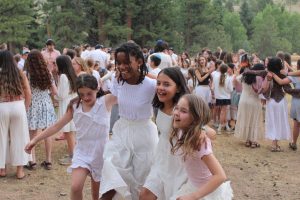
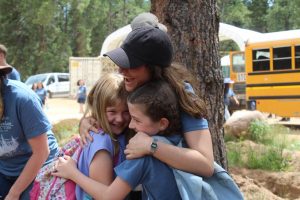
Year after year, we hear that camp gives chalutzim (campers) a strong sense of belonging. This year, 98% of parent survey respondents rated us a 4 or 5 out of 5 when asked whether the camp environment creates a sense of belonging. Campers build deep relationships with their madrichim (counselors), meaningful friendships with their peers, and a connection to Jewish community that extends well beyond the summer. One parent encapsulated this sentiment: |
| Camp has been such a vital part of my son’s development over these last years. It has helped him gain confidence, broaden his horizons, and make social connections that are among the most important in his life.
Many families shared that their children came home wanting to find Jewish communities that felt more like camp. Others told us that camp remains one of the main places where their children experience Judaism as something joyful, meaningful, and deeply connected to their everyday lives.
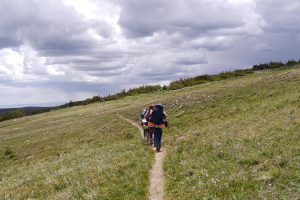
Perhaps the greatest compliment we receive is when campers come home talking about their madrichim. These relationships are at the heart of our educational approach. Our staff model the Jewish values we seek to cultivate, and campers emulate those values and can see themselves growing into those leadership roles one day. Masa At the heart of Ramah in the Rockies is our masa (backcountry excursion) program. More than any other program area, parents described masa as “transformative.” We heard story after story of campers returning home stronger, more confident, more capable, and proud of what they had accomplished.
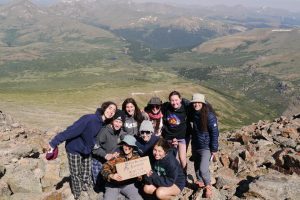
Families told us about children summiting their first 14er, sleeping under the stars, learning outdoor skills, leading their peers, and discovering that they were capable of more than they had imagined. Many parents shared that their children came home eager to hike, camp, and spend more time outdoors with their families. One parent wrote, “My children love masa and feel stronger and braver because of it.” Another described masa as “perfect,” saying that it builds skills, confidence, and personal growth. We were especially encouraged to hear that most parents of our younger chalutzim said their children loved masa, which is an improvement from the previous two summers. At the same time, we heard constructive feedback about the masa program. The most common concern involved food. While many chalutzim enjoyed the meals, others felt there was not enough variety, protein, or overall quantity, particularly on physically demanding trips (other than the new protein bars which were a massive hit!). We also heard requests for more variety in certain routes and activities, especially for returning campers who have participated in the same specialty masa’ot multiple summers in a row. As many of you know, we began reimagining portions of our masa program last year with the goal that no camper would repeat the same route two years in a row. While we were not able to roll out all of those changes this summer due to drought and forest fires, that work continues.
We also know that we need to continue investing in staff training. Outdoor leadership is one of the defining features of our camp, and we want our campers to leave not only with great memories but also with strong outdoor skills, sound Leave No Trace practices, and positive role models. As more of our trip leaders come through our own camper pipeline, we need to be even more intentional about teaching leadership and outdoor skills throughout the older edot (age groups) so campers finish our program ready to lead. Parent Communication One area where we saw meaningful improvement this summer was communication with families. We heard from many parents who appreciated the responsiveness, care, and partnership of our Camp Wellness Team. Led by Talia Horowitz, this year’s yoetzim (camp wellness professionals) helped hundreds of campers navigate homesickness, social challenges, anxiety, illness, and the normal ups and downs of camp life. When challenges arose, we worked hard to communicate clearly and quickly with families. Your partnership allowed us to support campers through difficult moments and helped make camp successful for the overwhelming majority of our chalutzim.
Parents also appreciated our return to having children send traditional handwritten letters home, and we made an extra effort to send mail from a USPS box in the city, instead of leaving it in our own box, shaving at least two days off the travel time for letters. At camp, chalutzim also appreciated receiving their mail daily after lunch. When chalutzim needed to send a parent an urgent note, our system for scanning occasional handwritten notes worked. Of course, we did not get everything right. Early in the summer, we failed to send travel confirmations to families at the end of IA, creating unnecessary confusion. While we corrected that mistake and did not repeat it, families should have received that information on time from the start. Similarly, while communication from our mirpa’ah (health center) improved significantly from previous years, there were times when we should have reached out to parents more quickly or more proactively. We are continuing to refine our systems so that families receive the information they want and need as soon as possible. Room for Improvement Language and Community Culture One concern we heard consistently from parents, particularly of middle-school campers, involved language. Many families reported that campers returned home using language that did not reflect the type of community we aspire to create. Some also described hearing about teasing, put-downs, and unkind speech among campers. Adolescence is a time when young people naturally experiment with boundaries, language, and identity. We understand and respect that reality. At the same time, camp should be a place where we elevate our communal standards, not simply mirror what exists elsewhere. Judaism places tremendous value on speech. Our tradition teaches that words have the power to build relationships, strengthen communities, and bring holiness into the world. It also teaches that words can cause real harm. In a world where many children spend significant time online and are exposed to increasingly harsh forms of communication, we believe camp has an opportunity to be countercultural by setting high expectations for kindness and menschiness. Next summer, community culture and respectful language will be a major educational focus. Through staff training, camper education, and intentional conversations around lashon hara (harmful speech) and kavod (respect), we hope to strengthen a culture where words are used to support and uplift one another. Medication Packaging If we had to summarize family feedback regarding our new medication packaging process in a single word, it would probably be “oy”. This summer’s changes were driven by new Colorado childcare regulations requiring medications to be packaged by licensed healthcare professionals. While some families appreciated the additional safety and organization, many found PackMyRx expensive, confusing, and difficult to navigate, particularly for families whose children take controlled medications. We heard your concerns, and we are exploring options and determining what flexibility may exist within state regulations. While we cannot promise major changes, we are committed to finding the least burdensome process possible while maintaining compliance and camper safety. Food Waste and Environmental Education A number of families told us that their children observed limited recycling, more food waste than in years past, and environmental practices that felt inconsistent with the values we seek to teach. These comments were especially important because environmental stewardship is a core part of Ramah in the Rockies’ mission and used to be one of the more impactful aspects of our program. While we continue to make meaningful investments in sustainability, including generating nearly half of our electricity through solar power, expanding our garden and animal programs, and improving stewardship of our land, we recognize that we have not been intentional enough in recent years about helping campers understand those efforts.
This summer, many campers responded positively to food waste demonstrations that allowed them to see firsthand how much food our community was throwing away. Those conversations reinforced for us that environmental education remains a powerful part of camp when it is made visible and tangible. We have already begun a comprehensive assessment of waste at camp and are exploring ways to reduce, reuse, and recycle more effectively. We also plan to reinvest in environmental education and are considering restoring a dedicated leadership position focused on waste reduction, recycling, and community education.
|